"I'm going to go to their offices, because whenever I hand out the CV nobody replies or they say ‘no’. So if I meet them face to face, I can blag my way in."

Toyin Owoseje | Proving Persistence Is The Key, Wrench and Bulldozer For Unlocking Opportunity’s Door

Feature Post Of The Week

In Her Words |

Principle 2:
The Beloved Community
is the framework for the future.

Dr. Martin Luther King, Jr |
Six Principles of Nonviolence

"

Food-For-Thought

social integration | soh-shuh l in-ti-grey-shuhn |
n.
"the blending and unifying of social groups, most commonly seen in the desegregation of races throughout history"

Yaaya asks:

To what extent do you feel social integration
for European black women has been achieved in the nation you live in?

?

Join The Conversation

Yaaya Asks About | Social integration for black women in Europe and for European black women globally

Showing posts with label fashion and textiles. Show all posts

Tuesday, October 08, 2013

Stepping Out Of The Shadow To Show The World Our Own Inner Light

"... It's that singular representation of black people … of black women
in society ...
It's that feeling of being told you're not important enough or
worth being recognised."

In the final part of our interview with Marie, creative director and founder of the jewellery line Light of Marie Jewels, we discuss what ‘social invisibility’ means to her, and who she looks up to for mentorship and inspiration. As we conclude the interview, Yaaya asks Marie to highlight her most proudest moments to date and her exciting future projects.

And so the conversation continues …


Social Invisibility & Creating Equal Opportunities


Yaaya:
One of our core principles is centred on bringing more attention to social issues that affect black girls and women in Europe. One of these issues is social invisibility. What does 'social invisibility' mean to you?
Marie-M J:
Social invisibility for me is that lack of representation of that … how do I say it, 'singular'? Yes, it’s that singular representation of black people …of black women in society, especially in the media. It's that feeling of being told you're not important enough or worth being recognised. For instance, if you asked me to name a famous black actress in France, I honestly wouldn't be able to immediately give you more than one name [Firmine Richard]. My goodness. Back then and even now.
Yaaya:
Do you feel there are sufficient equal opportunities for black women to showcase their creative talents?
Marie-M J:
Now? Yes, because there are many shows and exhibitions especially those catering for the black community. The only thing is that sometimes they can be very expensive.

Also, what I would say is that there needs to be more [consistent] focus on quality, and we need to learn how to work together better and be more professional. You know, not try to cut corners because I have been to some shows and sometimes I ask myself “why did we do that?” I feel from the bottom to the top we have to demand excellence of others and ourselves.
Yaaya:
If corners are being cut to save money, do you think then the underlying issue is a lack of sponsorship from our black communities and the wider European community?
Marie-M J:
Yes! I'm sure if we did our homework we'd be able to find people to help with sponsorship, we'd be able to do great things. And I think it is good you pointed out getting sponsorship from our black communities. I think this important for women to have more high-quality shows to showcase their work. We [black people] need to support and uplift ourselves.

Yaaya:
You mentioned in passing that you attended the Salon Boucles d’Ebène exhibition, an expo of products and services for the Afro-caribbean community in France. How important do you think such events are for the black community in France?
Marie-M J:
It is a way for us to know what is going on in our culture and a way for us to network and reunite to see each other. Also, I learn so much about my skin and my hair from events like that, because you wouldn't typically find them in the [mainstream] magazines.
Yaaya:
To what extent do you feel these exhibitions do enough to bring national exposure to the interests and cultures of the Afro-caribbean community in France and thus assist with social integration?
Marie-M J:
I think these events are great for the black community. People from other races in France also attend these events, but it is usually because they know other black people. I don't think these events are yet nationalised in a way that would draw all different races of people from all over France to one place. I think what is missing is the backing of the media. As well as inviting the black media stations, we need to also try to invite the other French media too [to do coverage of the events].

Mentors & Role Models


Yaaya:
A while ago we posted on our blog the question, “who do you consider to be your mentor/role model?” We pose the same question to you.
Marie-M J:
My role model and mentor would have to be my mum. She worked incredibly hard, I mean I can't remember a day when she was off-sick from work. She is so strong too, such a strong woman, she taught me how to be one: “No-one can stop you from doing what you want to do, no-one can stop you from growing, no-one can stop you from being educated ...”

My dad is also my role model. He also repeatedly told me the same: “You can do it, if you want to become someone you can do it. I know it is going to be hard to do it here [in France] because you have racism, but do not let anyone stop you!” This is what I teach my son. I also mentor my god-daughter, she lives in France and works as a make-up artist.
Yaaya:
As a black woman, how important to you do you think it is to be mentored by (a) a fellow woman, and (b) a fellow black woman?
Marie-M J:
I don't think race or gender is always important when it comes to choosing your mentor. However, what I will say is that I feel I would be able to get more advice from a black woman, because what she went through I might also go through. So in that respect, it might be difficult to completely identify with a white woman, because she might not be able to understand from personal experience what I have or will go through. But as a woman, yes I believe I would be able to get great advice from another woman, full stop.

Celebrating The Journey Thus Far. Celebrating The Journey Ahead.


Yaaya:
What would you say are some of your greatest personal and professional achievements to date?
Marie-M J:
My jewellery line! (Laughs). Also, I am going to be going back to school again to get my postgraduate certificate. So it's going to be hard balancing everything, but I am excited and ready.
Yaaya:
What are some of your future projects you are most excited about that our readers should look out for?
Marie-M J:
With my brother, we're trying to set up a foundation in France for people to know more about sickle-cell and how to live with it. In London, there are support groups and services for people with sickle-cell, but not so much in France. So we want to change this and help improve the quality of life for people with sickle-cell.

With my jewellery line I am going to be experimenting more with perspex.
Yaaya:
Perspex … like ‘acrylic glass’?
Marie-M J:
Yes. I love perspex: the cutting and the polishing. I am also looking into designing and making ties using different prints and unusual textiles. I'd love to design my own prints as well.

And So The Conversation Ends … For Now :)


Yaaya:
Marie, so what we'd like you to do is complete the following sentences with what immediately comes to mind.

A support system is important because ...
Marie-M J:
It helps people to better develop themselves.
Yaaya:
Ambition to me means ...
Marie-M J:
Growing.
Yaaya:
I still find it a challenge to …
Marie-M J:
To live with my illness.
Yaaya:
Success for me is ...
Marie-M J:
Giving 100% effort and completing a task that I set my mind and heart to do.
Yaaya:
Yaaya to me represents …
Marie-M J:
Women that are naturally confident with their own beauty, history and culture. It is a place to find truths about black women as told by black women.

This post concludes the final part of our interview with Marie-Maimoona Jeannot. Find out more about Marie’s jewellery line via her blog at Light Of Marie Jewels, Twitter at @LightOfMarie and Facebook at @LightOfMarieJewels.

Catch-up on the earlier parts of our conversation:

Part 1: Marie-Maimoona Jeannot, Introducing The Light Of Marie
Part 2: The Becoming Of Her Independence
Part 3: A Perspective: Being A Black Woman In Europe

Image Source | These images do not belong to Yaaya. Images courtesy of Marie-Maimoona Jeannot (Light Of Marie Jewels)

Thursday, October 03, 2013

A Perspective: Being A Black Woman In Europe

"You know it's only going to be less than ten years since we've had the first black journalist [Harry Roselmack] on mainstream television."

In Part 3 of this four-part post, Marie retrospectively speaks on her experiences as a black woman in Europe, and her opinion on the state of social-integration amongst black communities in France.

And so the conversation continues …


Black People in Europe: Her Experience.


Yaaya:
You are a French-native. Where is your family from originally?
Marie-M J:
Martinique, it's a French island, so we are French-Caribbean. My parents migrated to France in the 1940's, and since then they've lived there [France]. I was born in Paris, France.
Yaaya:
What was it like growing up in France as a black woman?
Marie-M J:
It was hard because … (Sighs) Parts of France was and still can be racist. So I was having to fight people's prejudices all the time because of stupid, ignorant things that was said or done. [For example,] the bus stop: you've been queuing there and somebody cuts the queue in front of you. You speak up to tell them “excuse me, I was here first”, and then they tell you “F**king N***er, what [are] you doing?
Yaaya:
Do you feel there has been any progression in the way black people are treated in France?
Marie-M J:
I don't know if I would say things are better. Now it's just a bit more hidden.
Yaaya:
In what way is it hidden? Do you mean people aren't overtly using the N-word?
Marie-M J:
No, no … that word is still used. It's more like you're not going to hear in the media any news about racial [injustices].
Yaaya:
Hmm …
Marie-M J:
You know it's only going to be less than ten years since we've had the first black journalist, Harry Roselmack, on mainstream television. You never really saw a black person on [French] television stations unless he was a clown. They try now to have more ethnic minorities on TV, but there are not enough. Not enough at all.

When I came to London almost twenty years ago, I went to open a bank account and I saw a black manager. I was so shocked, because you would never ever see that in France. Never … a black person being a manager of a bank?! Never, no way! That's not possible. I would say the majority of the black people in France are working for the government: for France telecommunications, as the police on estates, or as cleaners. In the private sector, you won't find lots of black people there. There is not much.

When I was younger, my parents would say to me “you need to make sure you have a wage every month, so you need to have a secure job.” My mum wanted me to work with her at France Telecoms. But I told her “no, that's not me. Mum, I can't … that's not me.


Yaaya:
What about when you were a younger girl, when you're going to school? Were those prejudiced attitudes also prevalent there as well?
Marie-M J:
Not really. I grew up in Bondy, one of the suburbs in Paris. This is where a lot of the black people lived. So I saw people who 'looked' like me. My best-friend was also from Bondy, she still lives there. So I wasn't exposed to prejudiced attitudes then because I was surrounded by a large African and Caribbean community.
Yaaya:
Like you said, France has a mixture of different African and Caribbean communities. What is your opinion on social integration in France between the African communities and the Caribbean communities?
Marie-M J:
In France you have many of the communities belonging to African countries once colonised by France. Like Senegal, Zaire or Congo, and Cameroon etcetera. But there was that underlying tension between the French-African and French-Caribbean communities. Less so now, but sometimes the tension is still there.
Yaaya:
Why do think it was like this?
Marie-M J:
I think for the generation before mine that were French-Caribbean, if you told them they were black and African, they might have responded “no way, I am not” because for them they were completely French. They were from Martinique or Guadeloupe or Guyana, or any one of the other French-Caribbean countries. That stirred problems about superiority and inferiority. It's a shame, because I think it's important to recognise where you really come from and acknowledge where your ancestors came from. I mean, we were all brought out to the Caribbean.

I can't speak for everyone, but I know that because I am black I am also African. There's no doubt there for me. Now, the real open question is “where do I come from [in Africa]?” Everyone says I have got features of a Cameroonian. But I honestly don't know, I would like to know though: I am trying to find it out because I don't know anything about my African heritage.
Yaaya:
How does that make you feel? Do you feel like a part of your identity is missing?
Marie-M J:
Yes, there is a big gap because I would like to know where I come from. The culture of where I come from. The history of where I come from. I don't really know anything about my mum's side because she lost her parents when she was seven years old. For my dad, his father wasn't his [biological] parent. Also , my granddad passed away. He was a bricklayer and some bricks fell on him, and there weren't good medical facilities back then so he developed gangrene and died. So I don't really know anything about my father's side either.

Even as I tell you that I am Caribbean. I feel more French than Caribbean because I've lived in France for twenty-three years. I've never really lived in Martinique, the longest I had stayed there was two months for holidays. So regarding knowing about my Caribbean or African culture etcetera … I honestly don't know [much].

The other reason why filling this void or gap in my identity is important is because they say sickle-cell is genetic, and sickle-cell trait is more prevalent with people from [sub-Saharan] Africa.


Yaaya:
What perceptions do you think are held of black people in France?
Marie-M J:
There is a lot of stereotyping. “We are love hip hop music, we love to party, we are always late and we are lazy”. In France, when you are looking for a job, they ask you to put a picture of yourself on your CV. If they think you are from Northern Africa, you know Morocco or Tunisia, then [your CV goes] straight into the bin. If you are black, then some may go in the bin and some they may keep.

About black women, the stereotype is that we are loud. But I think people confuse being outspoken and voicing what you think with being loud. However, compared to the black men, we are considered more docile.
Yaaya:
Can you draw on any obvious or subtle social differences between living in England and living in France as a black woman?
Marie-M J:
For me, I find that living in England as a black woman is better. Easier. I won't say this is the same [opinion] for all black women emigrating from France to England, but for me I find there are more opportunities for education and jobs. Compared to France, I find that here in England people care less about my gender and race. Again, this is my personal experience, I wouldn't generalise this for all black women.
Yaaya:
What does it mean to you to be a black woman in European society?
Marie-M J:
Wow. How do I answer that? (Pauses to think) I'd say in France, it's often a struggle to be a black woman because you can't just be good or great. You need to be the best at everything because you prepare yourself to believe that there is only one spot available for a black woman. When I was younger, I was modelling. Every single agency I'd seen had at most three black girls in their books. The dark-skinned one, the one that was my colour, and the light-skinned one. And that was it. So if you went to an agency and you saw three black girls already in their books, then there was no point in staying because you weren't going to be able to have a place.

However, I think it's important to be yourself and not compromise who you are in this process of trying to the best. I don't apologise for being myself, for speaking up to voice my opinion especially when injustice is happening.

Look out for the final post of Yaaya’s conversation with Marie, where we understand her interpretation of social invisibility, the importance of mentoring, and her achievements and future ambitions.

Do you also identify with any of Marie’s experiences living as a black person in Europe? Leave your comments below to join the conversation, we’d love to hear your story too.

Image Source | These images do not belong to Yaaya. Images courtesy of Marie-Maimoona Jeannot (Light Of Marie Jewels)

Friday, September 27, 2013

The Becoming Of Her Independence

"I can also make and sell
my jewellery and not feel completely dependent
on something or someone.
I am my own woman."

In the second part of our conversation with Marie, she bravely opens up about her personal struggle with Sickle-cell, and retrospectively explains how this has motivated her to become more independent in her career ambitions.

And so the conversation continues …


Starting Again & (Re-)Building Her Independence


Yaaya:
If you wouldn't mind, could you speak more about your battle with Sickle-cell?
Marie-M J:
All my life I have suffered from [Sickle-cell] crises. And so it can be difficult, because you go to work, but in the back of your mind, you know that you might lose your job because you are sick all the time.

When I arrived in London, I was able to manage my Sickle-cell. But I made a mistake. If you get any infections or any colds, you have to go and see your GP. If you forget about that, you're making your life a lot worse. But I said “oh, it's Sickle-cell, I know how to manage it”.
Yaaya:
What was the turning point for you health-wise?
Marie-M J:
I travelled to Paris to see my GP there, and then I came back to London. I was working and became very weak, it was very very bizarre, so I went to see my GP [in London] and he gave me some medication. I lost consciousness for a whole day and had to go to A&E. They had to give me a lot … a lot of blood, because my haemoglobin went down [to severe levels]. I was dying, basically. But, my haematologist didn't check my anti-bodies, so now I am on dialysis.
Yaaya:
It's difficult for us to imagine what you must have gone through when that happened. Would you be able to share with our readers, especially to another person going through the same situation, how you dealt with the aftermath?
Marie-M J:
It was a dark time for me, I was just thinking about what happened, the decisions made, and what I should have done differently. There were lots of questions to reflect on and there was lots of searching. I stopped working for a year and so I lost my job. Instead of only working for someone else and not knowing if they were going to keep me employed because I was sick all the time, [I said] “why don't I work on doing something for myself, and start my own business?” So I did a few things before focusing on designing and making jewellery.


I am also a representative for a renal focus group. When I started to go on dialysis, I didn't understand anything and its impact to my health. And I believe this lack of education about kidney donors and dialysis is very common within the black community. So as a representative, I try to promote awareness about organ donation to black people because successful matches or compatibility really does depend on genetics and race. So the more black people that are aware, then more black people can donate their organs, and therefore more lives of black people can be helped.
Yaaya:
From your story, we can see how starting your own business was about you empowering yourself, in a very personal and difficult circumstance, to provide stability for you and your son.
Marie-M J:
Yes, it was and is still very much like that. I also work as a teacher at a private college. Again, there is that voice of caution in the back of your head that tells you things can change very quickly. It's not just about the Sickle-cell. It's about life in general. Anything can happen to my health, anything can also happen to that college as well. So I wanted to build something that could give me, not just “a plan B”, but also that feeling of ownership and independence. I still teach, but now I can also make and sell my jewellery and not feel completely dependent on something or someone. I am my own woman.


Educating Thy Self


Yaaya:
You didn’t have a formal education per se in jewellery making. How did you educate yourself about the creative process of jewellery making?
Marie-M J:
Yes, I didn't have a formal higher-education. I didn't do a three or four-year degree in jewellery design. But, I did go to college to do different short-courses in design and making jewellery, because there is an art to it.
Yaaya:
What do you do to continue to hone your craft?
Marie-M J:
I still do courses, for instance, I am still learning how to design and make enamel jewellery, which requires you to be more clinical and technically precise to skilfully make it well. Enamel jewellery is made with very small broken pieces of glass that you [embed] on silver that has been pre-prepared with a glue-like [substance]. You then put it in the oven to melt the glass at a very high temperature. And then the result is this shiny and colourfully decorated silver. The outcome is very beautiful. Three or four months ago, I had the opportunity to make wedding rings using enamel for a friend that got married. The bride was really happy (Laughs).

Yaaya:
Sounds like there is a science as well as an art to it too!
Marie-M J:
Yes, there really is (Laughs). So yes, back to your question, I go to college to learn. In this business, in fact in life, you never stop learning.
Yaaya:
What advice would you give to someone wishing to start-up their own jewellery line?
Marie-M J:
You have to really love the craftsmanship of jewellery. You have to love designing. And you have to be patient (Laughs). It's not everyday when you make something that it will work … that it will go according to plan. Sometimes creativity has it's own clock. So if things are not going right today, you can't force it, come back to it tomorrow with a freshness. I think it is also really important to design on paper first, otherwise you'll end up wasting a lot of time, material and money. And I speak from experience. The business administrative side is also important when it comes to finances, marketing and PR. My brother helps me with my PR. With marketing, it's really important to understand who your niche is and who are your clientèle.

We will continue this conversation in our Part 3 post, where Marie provides her own perspective on living as a black person in Europe and her experiences with social integration in France.

Leave your comments below to continue to support Yaaya’s vision of providing platforms to voice powerful stories of incredible women like Marie-Maimoona Jeannot.

Image Source | These images do not belong to Yaaya. Images courtesy of Marie-Maimoona Jeannot (Light Of Marie Jewels)

Thursday, September 26, 2013

Marie-Maimoona Jeannot, Introducing The Light Of Marie

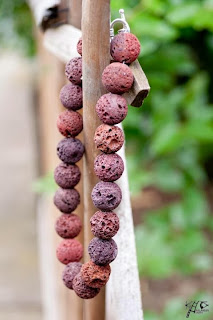
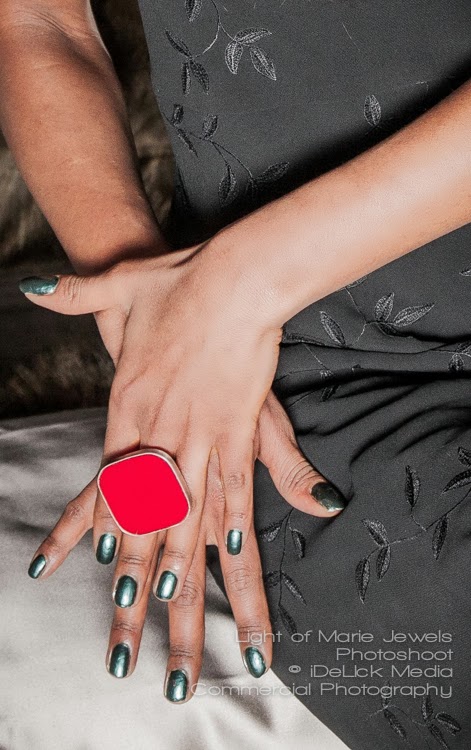
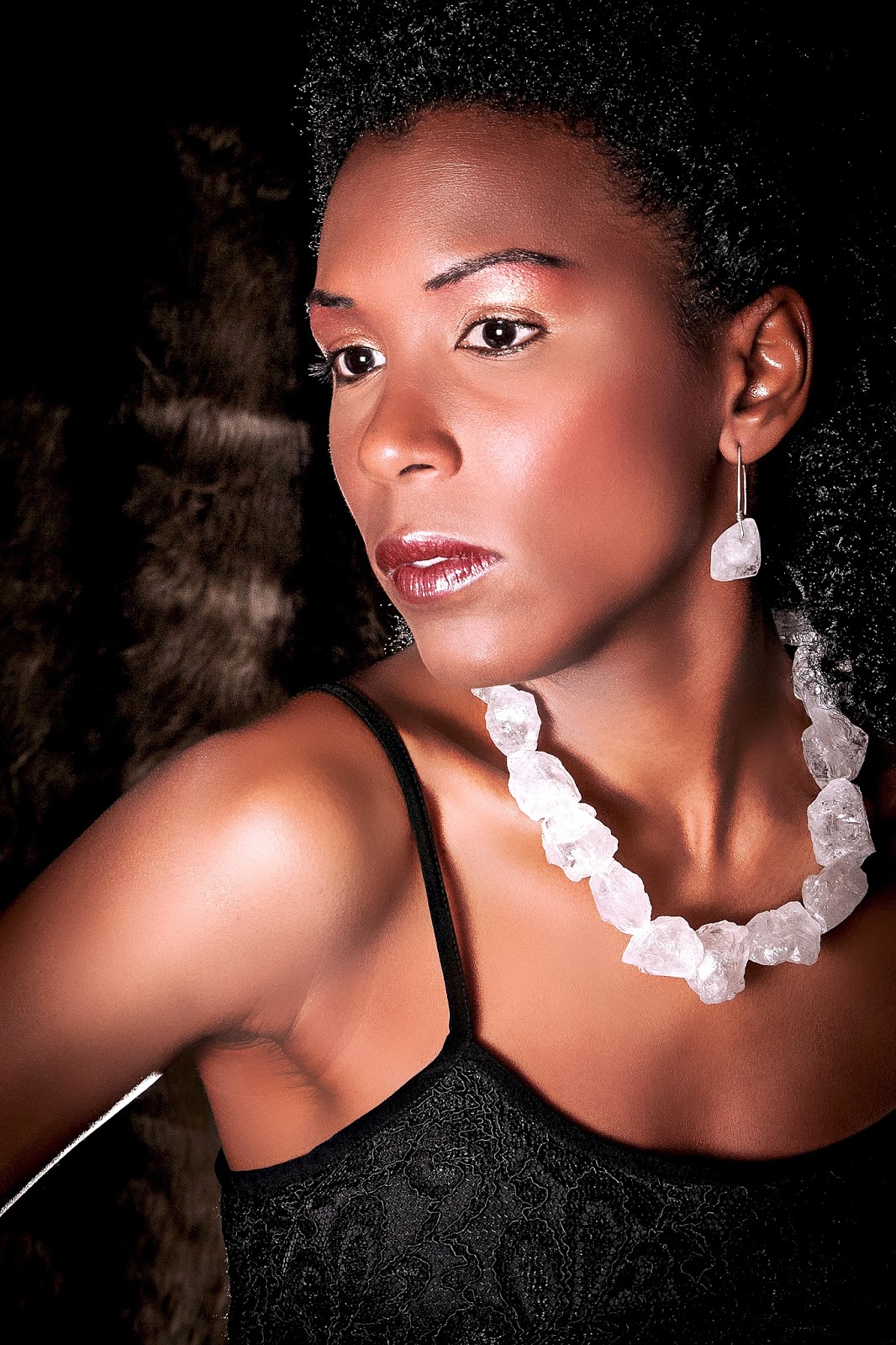
Marie-Maimoona Jeannot, born and raised in France by her Martiniquais parents, has been living and working in London for many years. By trade she is an ESOL (English for Speakers of Other Languages) tutor, an employability co-ordinator and a representative for a dialysis unit. For her own creative ambitions and independence, she is the founder and designer for the stunning jewellery line Light Of Marie Jewels. Her jewellery line specialises in truly unique accessories made from sterling silver and semi-precious stones.

In the first post of this four-part interview, Marie talks to Yaaya about why she wanted to be a part of this conversation, how she started her jewellery line Light Of Marie Jewels, and the personal significance to her of being a black woman with her own business.

And so the conversation begins …

When Yaaya Met The Light Of Marie Jewels


Yaaya:
Hi Marie, it’s very lovely to meet you.
Marie-M J:
It's very nice to meet you too!
Yaaya:
Out of curiosity, why did you think it was important to share your story through Yaaya?
Marie-M J:
I felt it was a great chance to share my experiences and what I've learned along what has sometimes been a difficult life-journey. As a woman, I wanted the chance for people to hear my perspective … you know, my true story.

As an owner of a small business in a very [competitive] market, this was also a great PR opportunity. A way to share my passion and what I love doing with people. Not just for commercial reasons, but for people to see what I have been able to accomplish and hopefully inspire another person to do the same.

When I looked at your blog, I really liked it. One of the aspects of Yaaya that I identified with was this [sentiment of] accepting and celebrating the diversity [of] black women. And this acceptance of allowing us [black women] to be natural. Not feeling you have to change who are to be socially relevant or sometimes even tolerated.


Shining The Light Of Marie


Yaaya:
You are the founder and designer for the jewellery line Light Of Marie Jewels, which designs and makes hand-crafted jewellery using semi-precious stones and sterling silver. Can you tell us a bit more of the what 'Light Of Marie Jewels' means and the design process?
Marie-M J:
It's about my inner-light. But also of any woman's inner-light. Her radiance. When I design my jewellery, I think about how I want it to make me or the woman feel, how I want it to not only look beautiful around her neck, if it is a necklace, but also …. bring out her inner beauty.

When I design my jewellery, the ideas usually come to me when I am trying to think about what I would like to wear with a certain dress, and how more beautiful it would be if I wore 'that' necklace. Sometimes, I even dream about it. I think a lot. So when I am on a train or on a bus and I design a particular piece of jewellery in my head, as soon as I go home, I draw it on a piece of paper really nicely. You have to put it on paper straight away, otherwise you might forget it.
Yaaya:
Can you explain the choices for the materials you use to make your jewellery?
Marie-M J:
I use semi-precious stones because they are natural. And [I use] silver because I love silver. I'm not really a 'gold' person, and it's also really expensive anyway. But silver, I really like. I love the different ways you can design with it, and solder it into different shapes.

I just really like silver and the creative [possibilities]. (Pauses) It's the fact that you start with a sheet of silver and you can make anything you want. A ring, a bracelet, necklace, earrings … you know. And when you finish, you yourself are amazed. [It's] like “wow”.
Yaaya:
So it's that transformation process that you like. Taking something very raw and using that to visually and tactilely interpret an 'in-that-moment' idea or an emotion.
Marie-M J:
Yes … yes!
Yaaya:
How did ‘Light Of Marie Jewels’ start?
Marie-M J:
(Thinks) I have been doing this for six years. My son is seventeen now, but at the time when I started he was eleven years old. Then, he was telling me all the time, “I'm bored, I'm bored, I'm bored!” So I said to him, “well, if you're bored, we're going to find something for you to do”.


So I gathered some leaflets from a local college [The Forest Gate Learning Centre], and I saw a course for jewellery making. I went to the college to make some enquiries and learned about silver jewellery-making course and enrolled onto the course. Don't worry, I didn't forget about my son! (Laughs).
Yaaya:
Do you have a particular target in mind for your jewellery line?
Marie-M J:
I design jewellery for men too. But I think I am more passionate about designing jewellery for women. 'Light of Marie' is for the woman that carries herself with a quiet confidence. She is elegant. She appreciates great jewellery craftsmanship and can find true beauty in the naturalness of raw materials.
Yaaya:
How would you describe the style of your jewellery line in one sentence?
Marie-M J:
Beauty that is very individual, elegant and sophisticated.
Yaaya:
What personal significance does 'Light Of Marie Jewels' have for you?
Marie-M J:
When I make my jewellery, it's very therapeutic. I love the welding process as well. It's so weird, but it makes me so happy and joyful, and I hope that translates into the finished product. I am doing and making something that I love, that I want to be exquisite and stunning.

But more importantly, Light Of Marie Jewels is a way for me to express myself in a creative way. It's a way for people to hold my story in their hands and to relate to it by including it into their own style. My jewellery is typically chunky or statement pieces. I think it's because I am reserved that I like my jewellery to speak for itself, make people ask questions, or take a second look because they've seen something unexpected.
Yaaya:
How important did you think it was for yourself as a woman to own and start your own business?
Marie-M J:
It was extremely important for me. I think it's good for women to be entrepreneurial. But for me it was personally significant because of the way my life has been. You see, I have Sickle-cell.

Look out for Part 2 of this four-part post on Friday 27th September, where Yaaya discusses with Marie one of the most personal and difficult chapters in her life-journey.

Leave your comments below to let us know what inspiration you take from Marie’s talents and creativity. Invite others to join the conversation by sharing this post!

Image Source | These images do not belong to Yaaya. Images courtesy of Marie-Maimoona Jeannot (Light Of Marie Jewels)
Saturday, September 21, 2013

Climbing The Ladder And Lending A Helping Hand

"Having a mentor ... is one of the most important things ever, and if there is a way we can get connected
to different types of mentors,
then I think we will all be successful young black women ..."

In the final part of our interview with Amma, we begin with a discussion on social invisibility and the representations of black women in the fashion industry. We then speak in depth about the importance of mentors, where Amma reveals how important a business mentor will be for the growth and success of Sarf’O, as well he own development as an entrepreneur. Our vivacious conversation ends with her detailing her achievements and hopes for Sarf’O in the future.

And so the conversation continues …

Social Invisibility


Yaaya:
One of the issues that we are very passionate about at Yaaya, is bringing more attention to the social invisibility of black women in Europe. Have you ever heard of the term social invisibility before?
Amma O:
Not really. I haven’t heard of that term. What comes to mind is the creating an awareness of a certain culture or society, or certain group of people. That’s what comes to mind when I think of social visibility.
Yaaya:
No, social invisibility.
Amma O:
Oh I see! Ok so something that is hidden, Yaaya is trying to bring it to light? I think we touched on that earlier, you know, allowing black women to have a say and a platform to shout out loud, and I think that’s what social invisibility means to me. It’s like you are not there, there is nothing there for you, but all of a sudden... it’s almost like freedom. Someone has opened the door for you to be heard. That’s what that means to me I think.
Yaaya:
Do black female designers get enough mainstream attention or global opportunities to showcase their work?
Amma O:
I think you can get it [media attention], and it is out there, but you have to struggle before you can get it. You need to to invest time and money to get that exposure. So it is out there, but before you can get to it you must struggle.
Yaaya:
Why do you think this is?
Amma O:
That’s a very good question actually.Because African fashion is not on the high street, a lot of Europeans are not used to African fashion, or do not know about it, hence it is very difficult to convince them that this it is great. That’s why it’s difficult, and why it’s a struggle for people to accept it.
Yaaya:
What do you think could be done to address this issue?
Amma O:
People shouldn’t give up. We should just keep going and keep pushing. We need to let the world hear what we’ve got to say, what we do, and show our creativity. At the end of the day the world is full of creative things, so why are we not allowed to show what we can do? I don’t have a specific solution, but things like blogging about African fashion and creativity, allows people to find out what we do. Exposure online, Facebook and going to London Fashion week are all things we can do. It’s hard, but we will achieve what we want in the end.

Support Networks, Role Models And Mentoring


Yaaya:
As a young person starting out in the fashion industry, we would imagine networks of support, and guidance from a mentor in the industry is invaluable. Do you have a mentor, or a network of support you can tap into to seek advice and encouragement?
Amma O:
No I don’t, and it’s such a shame. It’s something that I’ve recently been sitting down and thinking about, as I don’t have a background in business. I’ve always had the passion to be an entrepreneur, and own my own businesses, but that doesn’t mean I have all the skills and qualities required. Having a mentor, somebody that I can speak to about certain problems and issues are very important when you are starting your own business. When your head gets crowded, you need somebody to help you group your thoughts, and steer you in the right direction. That’s why it’s very important. Going to places to network like fashion shows, exhibitions, fashion events, or even just normal professional settings, where a lot of professional people are about also helps. Having a mentor is an important thing, and if you don’t have one, its very hard.
Yaaya:
Do you have any plans to try and reach out and find a mentor?
Amma O:
Definitely! I’ve been going to seminars about setting up your own business, and places where you can find mentors, but I’ve noticed that they are always in a rush! They don’t give you that much time. I’ve learnt a little bit from some of the people I’ve met, and I try to seek help here and there. Some of my family members give me books to read about business, so I’m starting to read those books. I know people who are starting out as well, and I go to them when I am struggling. I am definitely looking for some sort of mentor to assist me, and I’m going to keep searching until I find one! (Laughs)
Yaaya:
What designers do you currently look up to and why?
Amma O:
Within African fashion?
Yaaya:
Generally.
Amma O:
Because I’m into shoes, I look at people like Vivienne Westwood or Giuseppe Zanotti. I look at Jeffrey Campbell’s collection a lot as well. I know he [Jeffrey Campbell] is everywhere, and he is famous and popular, but the way that he thinks about designing shoes is amazing! There are some semi-popular designers who are quite underground, but known amongst the celebrities that I look up to. I do research on different types of shoe-makers and designers as well. These are people that inspire me alot from time to time. If I’m struggling with designing something, I go on the net, look around, and see what’s in, and think "how am I going to infuse my 'African-ness' with this style?" (Laughs)
Yaaya:
If you had the opportunity to reach out to any of the designers you mentioned, and ask them to be your mentor, would you?
Amma O:
Hell yes! Definitely, because they came from somewhere, and they’ve got to where they are now. That’s the question that I would like to ask them. “You started from somewhere, how did you get to where you are now?” because that’s the journey that I’m on. I would like to know the sort of things they went through to get to where they are now. I would like to ask for their advice, and see how they can assist me. Maybe we could all work together as well (Laughs).
Yaaya:
How important do you think mentoring is, especially to black girls and women?
Amma O:
We [black girls and women] are not always encouraged to set up our own businesses or become entrepenuers. You would be lucky if you have parents that encourage you to start your own business! I think when you have that mindset, the mindset of standing on your own feet, it’s important to have someone, like a business person, to help you out.

Recently my mum was telling me to get a job and save up, which is a good thing. You should get a job and save up, but I’ve always heard this saying that a wage is to live on but a salary is for a lifetime. I think I’ve messed the saying up! (Laughs) But essentially if you have your own business, you can push yourself. You have the vision, and you know what you want out of it. No one will ask you about your money, or how you spend it either. Having a mentor when you are starting up a business is one of the most important things ever, and if there is a way we can get connected to different types of mentors, then I think we will all be successful young black women. Not everyone is about a 9-to-5 job.
Yaaya:
What advice would you give to someone wanting to start their own fashion label?
Amma O:
We are all doing it, but my question is “what makes you stand out?” What makes you stand out, is what you should use to keep doing what you do. That’s my advice.
Yaaya:
Short and sweet!

Achievements And The Future


Yaaya:
What is your proudest moment to date so far in your career?
Amma O:
I just think when I’ve worked hard, and you see the fruits of your labour. To me that’s an achievement.
Yaaya:
Can you think of a specific example?
Amma O:
Recently I completed a fashion show, and it was really stressful. Once everything was on stage, and people were seeing my work and clapping for me, I just thought “this is amazing,” and this is what it is all about. You struggle and it’s going to be hard, but once people appreciate and respect what you do, I think in a sense you have achieved something because you are making an impact. When I walked on the stage nobody would have thought that it is little ol’ me that has designed all of these things. I’ve probably inspired somebody to go ahead and do what they want to do. I also feel like I inspire my friends, family and younger sister, and that’s an achievement in itself. You have to come into the world and impact other people’s lives before you leave.
Yaaya:
What key milestones do you have for Sarf’O over the next year?
Amma O:
Lots! I’ve got quite a few things I would like to achieve for Sarf’O. We are still working on our website, so that is something that I’m hoping to complete by the end of this year. I want to get our products out there, and create more awareness about us [Sarf’O], and what we do. I would also like to get our products into shops as I said earlier, and approach shops like Selfridges, because they sell African designs. I’d also like to approach shops like Topshop, Zara and places like that.
Yaaya:
What are some of your future projects that you are most excited about, and that our readers should look out for?
Amma O:
They should just look forward to more of our creative designs. We are going to start doing other fashion shows and exhibitions.Next year we are planning to be at African Fashion Week. We will hopefully be doing the exhibition not the showcase. That’s something that we are looking into at the moment. They [Yaaya readers] should basically watch this space, and we will have more stuff out there for them to look forward to. We are not going to disappoint them!

And So The Conversation Ends … For Now :)


Yaaya:
So Amma, what we'd now like to do is ask you to complete the following sentences.

Setting up my own business has been a learning curve because ...
Amma O:
There have been a lot of challenges on the way, and looking at competition can put you off, but you need to stand firm.
Yaaya:
Designing makes me feel ...
Amma O:
Haap-ppyyyy! Very happy. And then when I see people wear my designs ... (Sighs) That’s how I feel. Put that in there! (Laughs)
Yaaya:
One of my ambitions is to ...
Amma O:
Be an entrepreneur.
Yaaya:
Yaaya to me represents ...
Amma O:
A great place for young African women to be heard!
Yaaya:
Brilliant ... Thank you Amma!

This post concludes the final part of our interview with Amma Osei. Find out more about Sarf’O via Twitter at @Sarfo_World and Facebook at SarfO.World.

Catch-up on the earlier parts of our conversation:

Part 1: Amma Osei, Capturing The ‘Boga’ Style

Part 2: Taking A Walk In Her Shoes

Image Source | These images do not belong to Yaaya. Images courtesy of Amma Osei (Sarf'O).

Friday, September 20, 2013

Taking A Walk In Her Shoes

"Taking on [Ghanaian] culture ... and adapting it to
the British way of living
is also what being Ghanaian and British
means to me"

In the penultimate part of this interview with Amma, the founder of Sarf’O, we explore her journey into the fashion industry. Her candid responses highlight the opportunities and challenges of being a young entrepreneur in a highly competitive industry, and the importance of persistence and self-belief. We also delve into Amma’s Ghanaian-British heritage, and its influence on both her designs and her desire to be successful.

And so the conversation continues …

Journey Into Fashion


Yaaya:
We’re now keen to explore your journey into fashion. You studied Media Production at De Montfort University, which we're sure is creative and hands-on like the world of fashion design. Did your degree influence your decision to start Sarf’O?
Amma O:
Not really. I’ve always loved fashion. When I was young, I told my mum that I wanted to be a fashion designer. When I was saying it, I was saying it for the fun of it. I didn’t know that it was actually going to become a reality. I’ve always loved fashion. This passion, and the fact that I love shoes, made me think “why not put these two things together and make something out of it”. Studying media production also helped me a lot, as although you are using the camera to see things from the outside, you are the one that sets up the story, and creates it. Designing bespoke shoes is what I create for people to wear. So I am the creator and somebody will wear my products.I also take my own product pictures, so again it’s what I want people to see that I put forward.
Yaaya:
So you are combining the skills you learnt at university, and your design skills?
Amma O:
Definitely. It’s very important to use all of your skills in your business.
Yaaya:
You started Sarf’O when you left university. At that point in time did you treat Sarf’O as a business, or was it something you just simply enjoyed doing?
Amma O:
It was actually a hobby (Laughs). I designed something for myself for my birthday, and everyone saw it and was like “wow, that’s very good.” I designed something for my sister’s friend for her birthday, which was a hit with the people at the party. My sister was one of the first people who really encouraged me to take Sarf’O seriously. She started to do this when her friend wore what I made for her, and everyone at the party liked it. I got orders to make shoes for people from there. Afterwards I thought, “hold on a minute, I can make money out of this. I’m sitting here unemployed, but I could be busy.This is something that I can start eating from. This is a business right here.” That’s how I got into it, but in the beginning it was definitely a hobby. I didn’t think it would be the way it is now. I’m quite grateful for that actually.
Yaaya:
As a young person, setting up a business is a wonderful achievement that demonstrates drive, commitment and an entrepreneurial flair. Was it ever one of your goals to set up a business?
Amma O:
Yes. This is one of a few businesses that I’ve thought of setting up, and that I had planned in my head. My head hurts everyday when I wake up (Laughs). There are so many things that I want to set up. I actually enjoy working for myself, and I think that is my goal in life to be an entrepreneur, work for myself, and do what I want to do, and not be told what to do all the time. That’s why I feel like starting now [will help] train myself to handle bigger things in the future.
Yaaya:
With business comes challenges and opportunities. What challenges and opportunities have you faced with Sarf’O so far?
Amma O:
Challenges. Sometimes you can get stuck. If you are on your own, if you haven’t got partners or other people that you work with, you can get really stuck. You always have to think of out of the box and develop new skills.

I’m now starting to learn how to sell myself a little bit more, especially when it comes to marketing. When I used to give out my business cards, I felt like I was bothering people, but now I realise that they actually they don’t mind, and I don’t think about it like that anymore, because its my business, and I have to make sure people know about it. These are difficult things that I’m tackling at the moment. Trying to sell yourself is a very hard thing to do when you are on your own. Sometimes you get stuck, you just think “what more can I do here?” You feel like you have to be more active, but at the same time you can [feel] unsure about how to move forward. You always have to be one step ahead. You can’t always just sit and wait. That’s another thing that I’m learning.

It is very difficult, but it's also very satisfying when you have achieved something. Like when I did the fashion show. I was really proud of myself. I felt that if I put my mind to it, Sarf’O can be bigger than it is now. So that’s the challenges and the opportunities.

You also get to meet great people in the industry, people that will encourage and support you, and you also meet people that are negative. It’s either you take it on, and don’t take it personal so you can improve, or you give up altogether. When you also see your competitors work it is hard, because when you see what other people are doing you think “why didn’t I think about that?” But actually your customer base is not the same as theirs. They [customers] like you for what you do, and they like another designer for what they do. We are all different.


Yaaya:
Speaking of customer base. What’s your customer base?
Amma O:
All kinds of people, but because my designs are African influenced, most of the time it’s mainly African people that are into my designs. Although I’m trying to reach all kinds of people. I mainly cater for young men and women. My shoes are mostly heels and platforms. My shoes are mainly for young, career women, who can rock heels!
Yaaya:
What’s your process for making shoes?
Amma O:
I’m not very good at drawing but I have a little book (Laughs). It’s so funny! I draw really silly drawings in there, and I annotate them. Although the designs are in my head, I put them on paper. So when it comes to designing: I open my book, and I know what I want to create, and what I want the shoes to look like. I always go straight into the designing. I don’t make a prototype because when I visualise it, to me, it’s already made. I just need to see it physically. That’s how I do it.

African Fashion and her Social Identity


Yaaya:
Your designs reflect a fusion of African textiles and contemporary European fashion trends. Would you say that this is a reflection of your British- Ghanaian heritage?
Amma O:
Yes, because I grew up in Ghana, and I grew up here as well. I feel like African print or textiles, is very beautiful. I don’t know how you see it, but the shapes and the geometry is just beautiful. When you put it [African textiles] on suede shoes or men’s shoes, or even when you apply a bit of Kente, it just brings it to life. Sometimes I think “why don’t they sell things like this in the shops, or on the high street?” When I finish making shoes, I start thinking about how am I going to get them in Topshop or Zara. Going back home and being here, definitely influences my work.
Yaaya:
What does being British and Ghanaian mean to you?
Amma O:
(Laughs)That’s a very interesting question, and I don’t even know how to answer it. Being Ghanaian is being cultured, knowing where you came from, not forgetting, and being grateful for what you have now. It’s the grateful part,which is also what being British means to me. I’m grateful because I’m here [in Britain],but that doesn’t mean that I’ve forgotten what it was like back there [Ghana]. I had the opportunity to live there, meet my family and grow up with them a little bit, and see the culture. That’s my drive in life - to make it and do well, so I can go back and show them [family in Ghana] that they shouldn’t be disappointed in me. Taking on the [Ghanaian] culture and bringing it here, and just adapting it to the British way of living is also what being Ghanaian and British means to me.
Yaaya:
What are your favourite African textiles and why?
Amma O:
That’s a very good question. As I’ve said earlier, I like the word ‘unique.’ I’m into patterns and geometry. If the pattern stands out, and the colours are bold and rich, that’s what I’m attracted to. I don’t have a specific African fabric that I like, as I don’t look at that. I just look at the colours, the boldness, and mixed patterns. That’s what attracts me to African fabric. I think Vlisco is very nice. They are just outstanding! They think outside of the box, and I would love to approach them one day and say: “give me some cloth, and lets work together!” They sell cloth and make clothes but I haven’t seen them make bags or shoes yet. That’s something I will try and get into later on, you know, just approaching people with ideas like that. Their fabrics are just amazing! When I went to Ghana I saw this shop, that had designed a corset type of dress with Vlisco, and I was like “oh wow this is amazing!” So I’m all about patterns and colours.

Yaaya:
Would you describe Sarf’O as an ‘African Fashion’ label?
Amma O:
The name itself is African. It’s of Ghanaian heritage. I’m not going to leave that behind, as it’s where I started, and how I do things. Although in the future I’m thinking of making different kinds of shoes, I’m still not going to leave the African influence out of it, as African fashion needs to be better exposed and be on the catwalks of London Fashion Week! I can see some of our tribal prints in Topshop, and I’m sure the designers were not necessarily thinking of Africa when they designed certain clothes. However when you look at the patterns and the colours, it reflects the types of clothes we [Africans] wear and sew. So you just think to yourself, “come on we can make it out here as well!” Only recently one of my friends sent me a picture of a pair of Christian Louboutin shoes, and he’s made a pair of canvas loafers out of tie and dye fabric, and I thought “this is crazy!” African print and fabric is everywhere, so I’m definitely not going to leave that out of my designs.
Yaaya:
Over the last couple of years, there has been a surge of African inspired designs in the shops of high street retailers. Why do you think this is?
Amma O:
It’s Africa! Our influence is now coming to light. In fact, everything that we are about is now coming to light. We want to be heard now, and it’s our time. Now is the time we have to spread the word about our fashion. I wasn’t proud to wear African fabric clothes until recently. I mean you are a young person. In 2005 would you wear African clothes? You wouldn’t, because you did not find it attractive. We were not encouraged to wear our own clothes, so now that it’s in fashion, even the Europeans themselves are like “wow these people have great stuff!” That’s why they are trying to fuse it into their dresses or shoes. African fashion is going to go a long way, and I can’t wait!
Yaaya:
Do you think the popularity of African designs and textiles has done any good in the way the world perceives Africa and Africans?
Amma O:
Yes. Fashion speaks to people. When other people see the creativity that comes out of Africa, or from British born Africans, and see how we value our African heritage and fuse it with European clothing, I’m sure they appreciate what they see. It’s brilliant that information is out there about what we wear and the talent of African designers, as it’s a great way to think about Africa.

Look out for Part 3 of Amma’s interview, where we discuss social invisibility and representations of black women in the fashion industry. The interview will conclude with what mentorship means to her, and her aspirations for Sarf’O.

Image Source | These images do not belong to Yaaya. Images courtesy of Amma Osei (Sarf’O).

Related Posts Plugin for WordPress, Blogger...